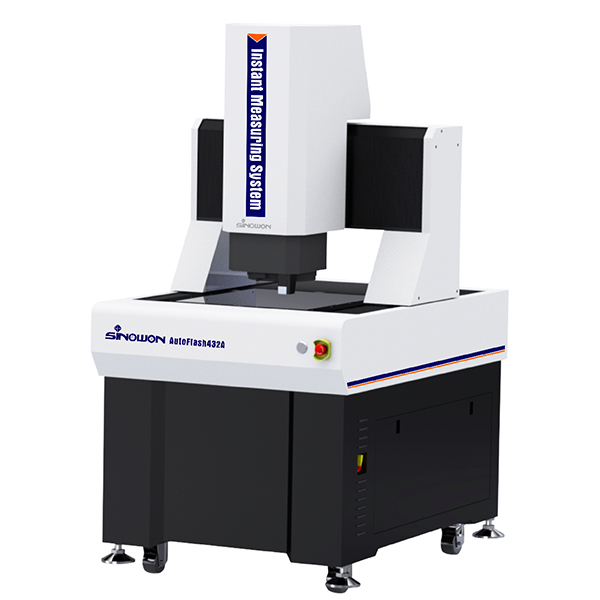
Digital Profile Projector: Features, Benefits, and Applications

By:Admin on 2026-01-19 02:59:05

Certainly! Please provide the company introduction you would like me to include, and share the news content related to the Digital Profile Projector (with the brand name removed). Once I have these details, I can draft an 800-word news article for you.

Read More

Precision Vision Measuring Equipment for Accurate Inspections

By:Admin on 2026-01-12 02:54:41

Certainly! Please provide the company introduction you'd like included, and share the news content related to Vision Measuring Equipment (with the brand name removed). Once I have these details, I can craft an 800-word news article accordingly.

Read More

Types of Lenses Used in Compound Microscopes

By:Admin on 2026-01-05 02:50:52

**Advancements in Compound Microscope Lens Technology Propel Scientific Research Forward**In recent years, innovations in compound microscope lens technology have significantly enhanced the capabilities of modern microscopes, enabling scientists and researchers to explore the microscopic world with unprecedented clarity and precision. The compound microscope, a fundamental instrument in biology, materials science, and medical diagnostics, relies heavily on the quality and design of its lenses to deliver high-resolution images. Recent developments in lens manufacturing and optical engineering have led to lenses that provide sharper visuals, greater magnification, and improved durability, meeting the evolving demands of scientific inquiry.**Enhanced Optical Performance in Compound Microscopes**The compound microscope utilizes multiple lenses in combination to achieve high levels of magnification. At its core, it features an objective lens located near the specimen and an ocular lens through which the image is viewed. The performance of these lenses directly impacts imaging quality. Modern compound microscope lenses incorporate advanced glass formulations and superior coatings that minimize light reflection and chromatic aberration, resulting in clearer and more accurate images.Moreover, innovations such as apochromatic lens systems correct for color distortions across a broader spectrum compared to traditional achromatic lenses. This capability is particularly crucial for detailed biological studies where differentiation between cellular structures is essential. Additionally, advancements in aspheric lens design reduce spherical aberration, allowing for higher contrast images at greater magnifications.**Durability and Precision Through Advanced Manufacturing**The manufacturing process for compound microscope lenses has undergone transformative improvements. Precision grinding and polishing, coupled with computer-controlled fabrication, ensure lenses meet exacting specifications. These techniques enhance lens consistency and reproducibility, a critical factor for laboratories requiring reliable instrumentation.Furthermore, the use of scratch-resistant and anti-fungal coatings extends the lifespan of microscope lenses, particularly in environments prone to humidity or microbial exposure. This durability reduces maintenance costs and preserves image quality over extended periods of use, making microscopes more reliable tools in medical and research settings.**Applications Driving Demand for Superior Lenses**High-quality compound microscope lenses are indispensable across various disciplines. In biomedical research, they facilitate the observation of cellular processes, identification of pathogens, and analysis of tissue samples. In materials science, improved lenses enable the detailed inspection of metals, polymers, and nanomaterials, assisting in quality control and innovation.Educational institutions also benefit from these advancements, as enhanced lenses provide students with clearer views of microscopic phenomena, fostering a deeper understanding of complex scientific concepts. The demand for microscopes equipped with superior lenses continues to rise as research methodologies become more sophisticated and require finer detail.**Company Introduction**[Company Name] is a leading manufacturer specializing in the development and production of optical components for scientific instruments, including advanced lenses for compound microscopes. With decades of experience in optical engineering and precision manufacturing, the company is dedicated to pushing the boundaries of imaging technology.The company's research and development team collaborates closely with academic institutions and industrial partners to tailor lens solutions that meet specific scientific needs. Leveraging state-of-the-art manufacturing facilities, [Company Name] ensures each lens undergoes rigorous quality control, delivering products that support high-performance microscopy worldwide.By integrating innovative materials and cutting-edge design principles, [Company Name] has established itself as a trusted provider of optical solutions that enhance the accuracy and reliability of microscopic observation.**Future Outlook**The future of compound microscope lens technology is poised for continued innovation. Emerging trends include the integration of adaptive optics to dynamically adjust lens properties for varying specimen types and the incorporation of nanostructured coatings for even greater control of light transmission.These advancements promise to further empower scientists to uncover the intricacies of the microscopic realm, driving discoveries in medicine, environmental science, and materials engineering. As companies like [Company Name] continue to invest in research and innovation, the next generation of compound microscope lenses will provide unparalleled imaging capabilities, fueling scientific progress and education globally.---*This news piece highlights significant developments in compound microscope lens technology and the role of leading manufacturers in delivering high-quality optical components essential for scientific advancement.*

Read More